


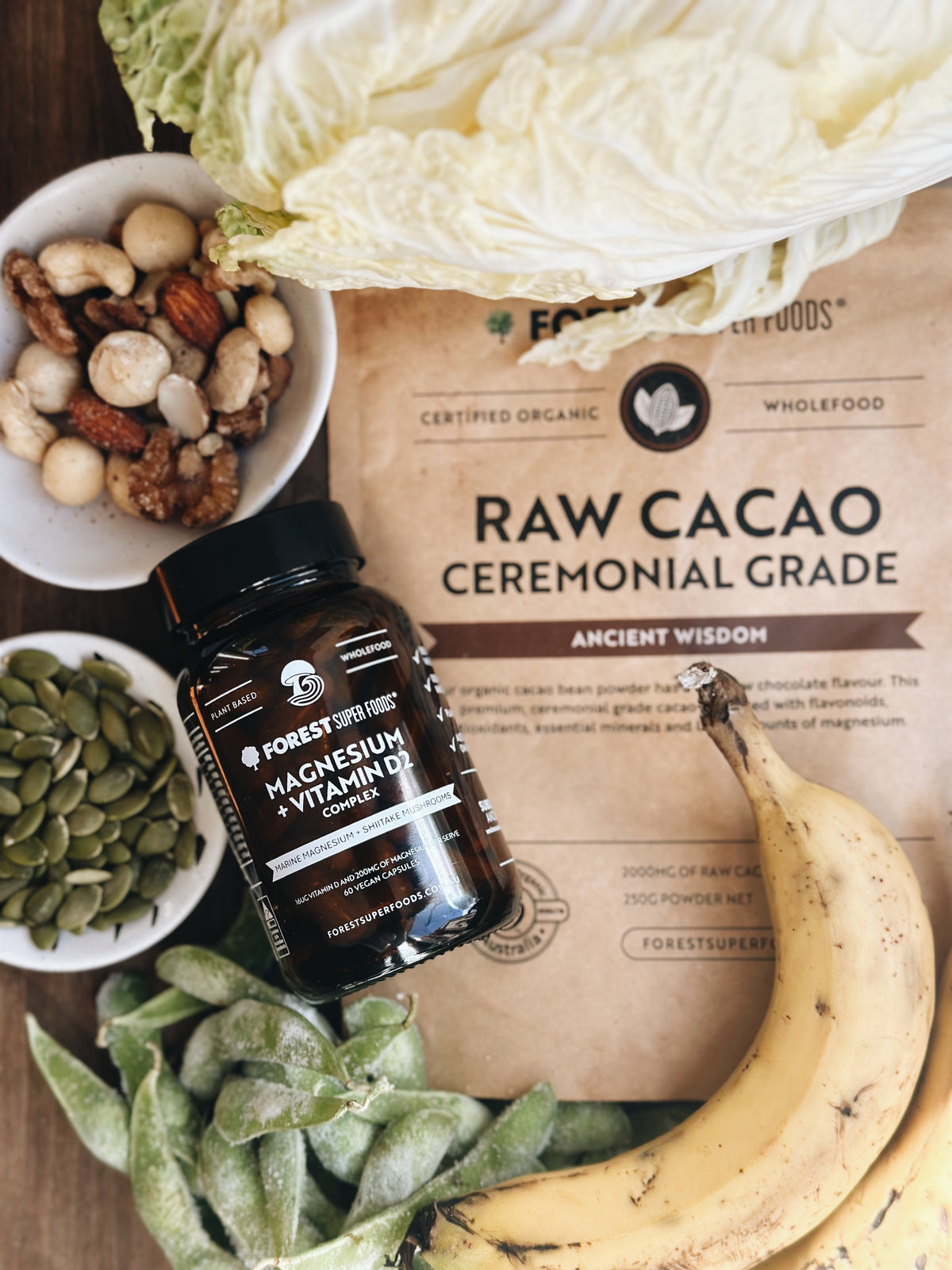

If you have been researching ways to sleep better, you have probably come across magnesium glycinate. It is often recommended for people who have trouble switching off at night.
What makes this form of magnesium different? Does the research support these claims and how does a naturally sourced magnesium fit in…
How magnesium supports the nervous system
Magnesium is an essential mineral that the body requires for normal functioning, growth and health, but it cannot produce on its own. For this reason it must be obtained through your diet
It is involved in more than 300 enzyme reactions, of which it has a role in the systems that govern rest and relaxation as well as energy production, normal muscle and nerve function and bone health.
So what is magnesium glycinate?
Magnesium glycinate is magnesium bound to the amino acid glycine. It's often called Magnesium bisglycinate, which refers to the fact that the magnesium is bound to two glycine molecules. The “glycinate” describes the compound used to deliver the magnesium. It's a manufactured chelate, made by reacting a magnesium source with glycine
Why glycinate gets the spotlight
Magnesium glycinate gets the spotlight because of the addition of glycine. Glycine has been studied on its own for sleep, but those studies are at at around 3g of glycine before bed. A typical magnesium glycinate capsule provides far less glycine than that, so its contribution is likely modest.
Is magnesium good for sleep
So there are a couple of mechanisms in play where magnesium improves sleep,
-it supports the activity of GABA, the brain's main slow down neurotransmitter
-It acts as a natural gatekeeper on NMDA receptors which drive excitatory signalling. When people have low magnesium, it can leave the nervous system more ‘switched on’
-Magnesium helps muscles release after contraction, which is why low levels are linked to cramps and restlessness.
-Magnesium and stress influence each other, stress actually increases magnesium loss and low magnesium can heighten stress reactivity.
Why supplement
Many adults don't meet the recommended intake through diet alone, especially those eating few leafy greens, nuts, seeds and wholegrains. Topping up a low intake is where supplementation is most likely to make a noticeable difference.
The common forms of magnesium supplements at a glance
Each form is magnesium paired with a different partner molecule, and each has its own profile.
|
Form |
What it's bound to |
Typically chosen for |
Gut tolerance |
|
Glycinate |
Glycine (amino acid) |
Relaxation, sleep routines |
Very gentle |
|
Citrate |
Citric acid |
General use, bowel regularity |
Can loosen stools |
|
Malate |
Malic acid |
Daytime energy, muscle comfort |
Gentle |
|
Chloride / sea-derived |
Mineral salts from seawater |
Natural, whole-mineral sourcing |
Generally gentle |
|
Oxide |
Oxygen |
High magnesium per capsule |
Least gentle |
A different approach: ocean-derived magnesium
All other forms of magnesium available are created in a laboratory by isolating one compound, magnesium.
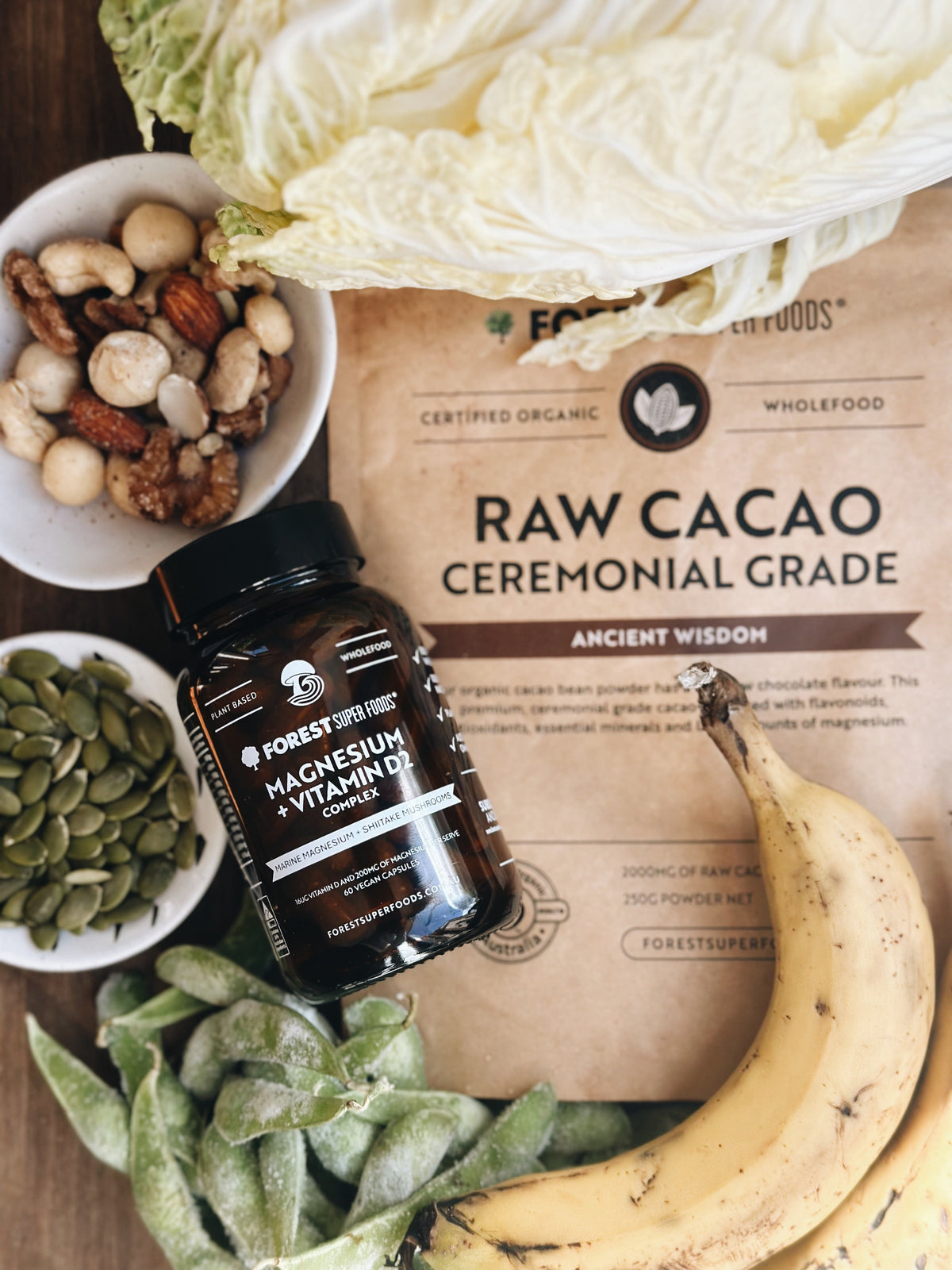
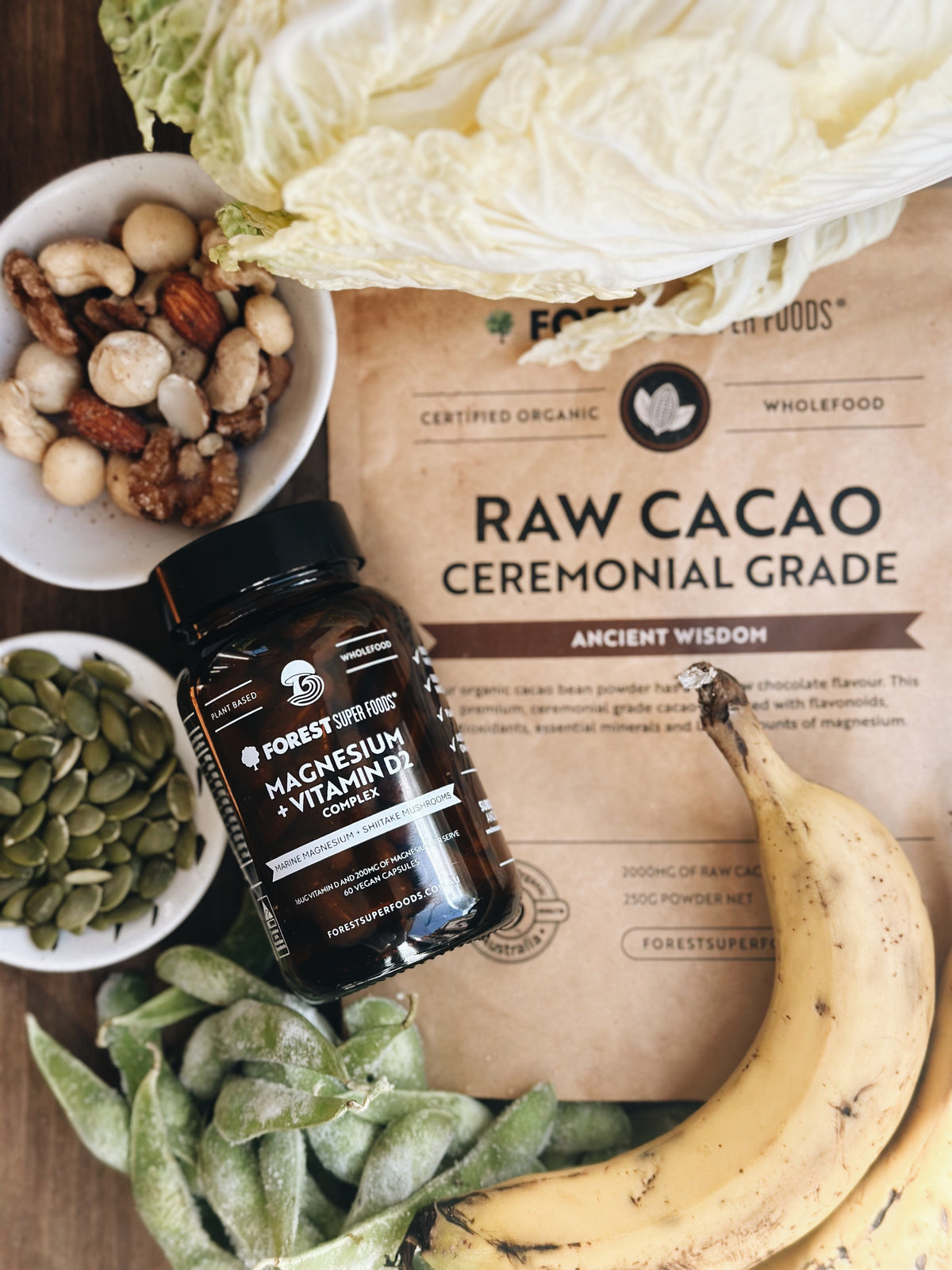
We do things differently, we created a product that sources magnesium straight from the ocean and it comes with 72 other trace minerals that are naturally occurring. We then paired it Shiitake mushrooms exposed to light, which create Vitamin D2. Magnesium and Vitamin D work together, magnesium is needed to convert Vitamin D into its active form and the Vitamin D helps your body absorb the magnesium more effectively.
Magnesium contributes to:
-
normal functioning of the nervous system
-
normal psychological function
-
the reduction of tiredness and fatigue
-
normal muscle function
If you've been reaching for glycinate because you want a calmer evening routine, our complex gives you the magnesium your nervous system relies on, from a clean, natural source, with vitamin D2 alongside it.
Shop Magnesium + Vitamin D2 Complex
Getting the most from magnesium
-
Take it in the evening, as part of a consistent wind-down routine.
-
Give it time. Topping up low magnesium status can take a few weeks of daily use.
-
Pair it with good sleep habits: a regular bedtime, a dark, cool room, and less screen time in the last hour.
-
Eat your magnesium too. Leafy greens, pumpkin seeds, almonds, legumes and wholegrains are all good sources.
Natural MagnesiumA powerful supplement for your health and wellness. Order Now |

|



Leave a comment
All comments are moderated before being published.
This site is protected by hCaptcha and the hCaptcha Privacy Policy and Terms of Service apply.